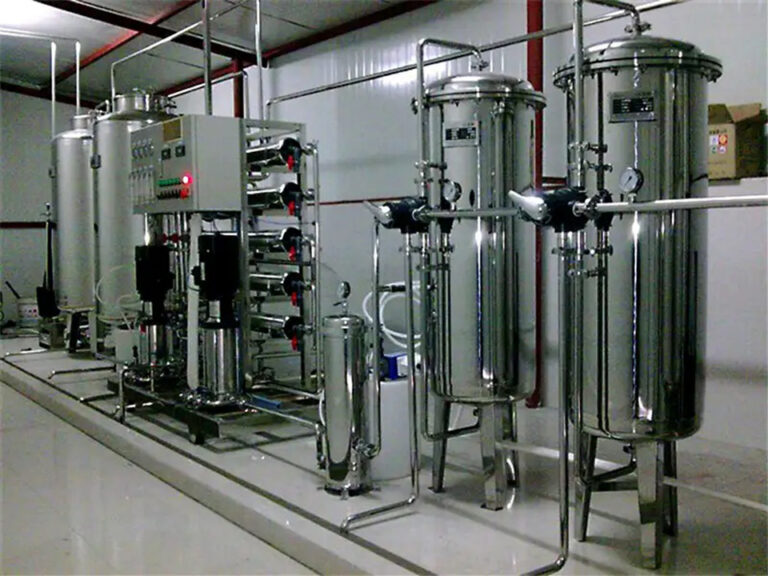
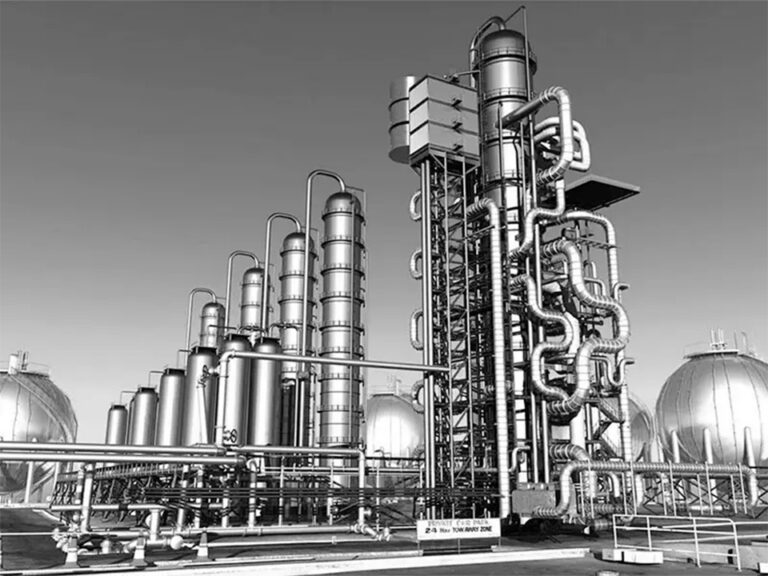
Guangzhou Lvyuan Water Purification Equipment Co., Ltd. is an industrial filter manufacturer founded in 2009 that designs and manufactures stainless steel filter housings, stainless steel sterile water tanks, filter elements, filter bags, ultra-polymer materials, and sintered filter products. Buyers choose Lvyuan for OEM/ODM support, ISO9001 quality control, and multi-country certifications.
Guangzhou Lvyuan Water Purification Equipment Co., Ltd.
Microelectronics buyers do not need another pretty cartridge brochure. They need a manufacturer that understands particle control, UPW risk, chemical compatibility, and the brutal economics of wafer defects.
Most vendors bluff. I have watched too many suppliers sell “0.2 micron” like that number alone wins serious fab business, even though the real fight is about extractables, ionic burden, wet-chem compatibility, housing finish, lot traceability, and whether the cartridge stays quiet when the line is running hard. Why do so many sellers still pitch commodity filters into a zero-forgiveness process?
The timing matters. Reuters reported in February 2024 that the Semiconductor Industry Association expected global chip sales to rise 13.1% to $595.3 billion after an ugly 2023, and SIA separately said U.S. semiconductor company sales totaled $264 billion in 2023; that is exactly the kind of demand pressure that makes contamination-control mistakes expensive, fast.
Table of Contents
The fab buyer is not shopping for a cartridge, but for defect insurance
I’ll say the quiet part. In microelectronics, the cartridge itself is secondary; what the buyer is really paying for is fewer yield losses, fewer excursion reports, fewer unplanned changeouts, and fewer meetings where engineering asks why a “cheaper equivalent” started shedding particles into a line that was supposed to stay invisible.
That is not theory. In a 2023 semiconductor industry background paper, contamination sources were described as coming from the fab environment and workers, process chemicals and gases, UPW used to rinse wafers, and even the packaging and delivery of chemicals, gases, and UPW; NIST’s 2024 draft environmental assessment for Intel’s Ocotillo site also describes how water that misses UPW standards is rejected for retreatment or lower-grade reuse rather than casually accepted, which tells you how narrow the operating window really is.
So when I hear “industrial filter cartridge manufacturer,” I do not think catalog, warehouse, and logo. I think validation discipline, material science, clean packaging, and the willingness to tell a buyer that PP depth media, PTFE membrane, sintered PE, and high-flow geometry are not interchangeable just because the flange fits.
What separates a real industrial filter cartridge manufacturer from a catalog assembler
Documentation matters. A real supplier should be able to explain retention method, differential-pressure limits, media chemistry, end-cap bonding, cleanroom packaging method, and what changes from lot to lot; if the conversation starts and ends with micron rating, I assume I am talking to a reseller, not a manufacturer.
Housing quality matters too. In high-purity service, the cartridge is only half the story; poor weld finish, dead legs, rough surfaces, or sloppy elastomer choices inside stainless steel sanitary filter housings can erase the value of a good element long before the buyer notices why counts drifted upward.
And venting is not a side note. For gas-side protection, sensor isolation, and moisture rejection, the wrong vent media can create a headache that looks like an instrumentation fault rather than a filtration failure, which is why I like manufacturers that can show where porous hydrophobic PTFE sensor filters belong and, just as importantly, where they do not.
The chemistry decides the cartridge, not the sales script
This is where weak suppliers get exposed. A cartridge that behaves well in neutral water may behave very differently in H₂O₂, NH₄OH, HCl, IPA, or mixed utility streams, and I do not trust any manufacturer that pretends one construction solves every fluid family across pretreatment, chemical distribution, and final polishing.
For upstream bulk-water duty, a 30-inch PP melt blown activated carbon water filter cartridge can make sense where the job is coarse particle capture or chlorine/organics reduction before tighter polishing stages. But I would not confuse that role with last-chance, high-purity point-of-use service, where pleated membrane filter cartridges earn their keep by staying cleaner, tighter, and more predictable under harder specifications.
For utility-scale flow and footprint efficiency, 40-inch high-flow cartridge filter designs and a customized micron high-flow filter cartridge can cut vessel count and changeout frequency. Good. But high flow is not automatically high purity, and I have seen buyers get seduced by throughput while ignoring what the fab actually needed: lower extractables, steadier retention, and less disruption during maintenance.
And yes, there is a place for porous structures. A porous industrial solid-liquid filtration sintered white-black PE filter cartridge may fit selected solid-liquid or utility-side duties where durability and washability matter, but I would still separate that conversation from the highest-purity semiconductor rinse loop unless the validation package is unusually strong.
The market is growing, and the water math is getting nastier
Here is the hard truth. The more governments subsidize fabs and the more foundries race into advanced-node capacity, the less patience buyers will have for vague filtration claims dressed up as engineering.
Reuters reported in April 2024 that TSMC’s Arizona expansion rose to $65 billion, added a third fab by 2030, aimed for 2-nanometer production in the second fab by 2028, and committed to a 90% water recycling rate in its Arizona factories. That is not a side detail; that is the operating context for every supplier selling into microelectronics now. When the fab is that capital-heavy and that water-aware, cartridge performance becomes a procurement, sustainability, and uptime issue at the same time.
Regulation is squeezing the system from the other side. EPA’s April 10, 2024 PFAS drinking-water rule set enforceable limits at 4 parts per trillion for PFOA and PFOS and 10 parts per trillion for PFNA, PFHxS, and HFPO-DA (GenX), while Reuters reported the rule could affect 6% to 10% of the 66,000 U.S. public water systems and protect roughly 100 million people. No, those limits do not directly regulate every cartridge manufacturer selling into fabs, but they do raise the stakes around upstream water quality, wastewater narratives, and what buyers now ask about fluorinated chemistries and treatment performance.
How to choose semiconductor filter cartridges without getting burned
I use a blunt standard. If a supplier cannot map one cartridge family to one contamination mechanism and one process step, I assume the qualification risk lands on me.
Final high-purity polishing, tight extractables limits
Activated carbon combination cartridge
Chlorine / organics reduction plus sediment handling
Feed-water pretreatment before finer stages
Any point where carbon fines or uncontrolled release would be unacceptable
Pleated membrane cartridge
Tight, stable retention with higher surface area
High purity water, chemical filtration, point-of-use polishing
Dirty feeds that should have been prefiltered first
Hydrophobic PTFE element
Gas venting, sensor protection, moisture rejection
Air/gas vents, instrument barriers, dry process protection
Liquid-heavy service without the right design margin
Sintered PE cartridge
Rigid porous structure for selected solid-liquid duties
Utility filtration, selected reusable or washdown applications
Highest-purity semiconductor rinse loops without deep validation
High-flow cartridge
Large-volume service with fewer elements
Centralized pretreatment or utility systems
Buyers who think fewer cartridges automatically means cleaner process fluid
My rule is simple. Match the cartridge to the fluid, the particle size challenge, the flow regime, the cleaning protocol, and the failure cost; then ask whether the manufacturer can prove retention, not just advertise it.
What I would demand before approving a manufacturer
I want uncomfortable specificity. A serious industrial filter cartridge manufacturer should hand over pore-rating method, retention test basis, recommended flow envelope, clean differential pressure, maximum temperature, chemical compatibility by fluid, extractables data, packaging protocol, and full lot traceability without acting like I asked for state secrets.
I also want honesty about fit. The best suppliers will tell you that a pleated membrane element is the right answer for one loop, a high-flow utility element is better for another, and a PTFE vent filter belongs somewhere else entirely. That kind of restraint is usually a good sign, because real manufacturers know where their product stops making sense.
FAQs
What is a microelectronics industrial filter cartridge manufacturer?
A microelectronics industrial filter cartridge manufacturer is a supplier that builds cartridges, housings, and validation packages specifically for semiconductor and related clean-process duty, where particle shedding, ionic contamination, extractables, and chemical compatibility are controlled tightly enough to protect yield, not merely to move water from one pipe to another. In practice, that means the supplier is selling contamination control, not generic filtration hardware.
How do I choose semiconductor filter cartridges?
Choosing semiconductor filter cartridges means matching media, pore rating, surface area, housing finish, and validation data to the exact fluid, temperature, flow, and contamination target of each step—UPW rinse, chemical delivery, vent filtration, slurry loop, or bulk pretreatment—rather than buying one cartridge type for an entire plant. Start with the process fluid, then work backward to the cartridge construction.
Are pleated membrane filter cartridges always better than melt-blown filters?
Pleated membrane filter cartridges are final-polishing elements designed for lower extractables and steadier fine-particle retention, while melt-blown cartridges are usually depth media used upstream for heavier solids loading and lower-cost pretreatment; one is not “better” in absolute terms because they solve different contamination problems at very different points in the system. The expensive mistake is using either one in the wrong place.
What data should a manufacturer provide before approval?
The minimum approval package from an industrial filter cartridge manufacturer should define micron rating, retention or beta method, extractables profile, differential-pressure limits, temperature window, chemical compatibility, lot traceability, packaging standard, and housing-material details, because without those numbers a buyer is comparing adjectives instead of filtration performance. If the data sheet stays vague, walk away.